
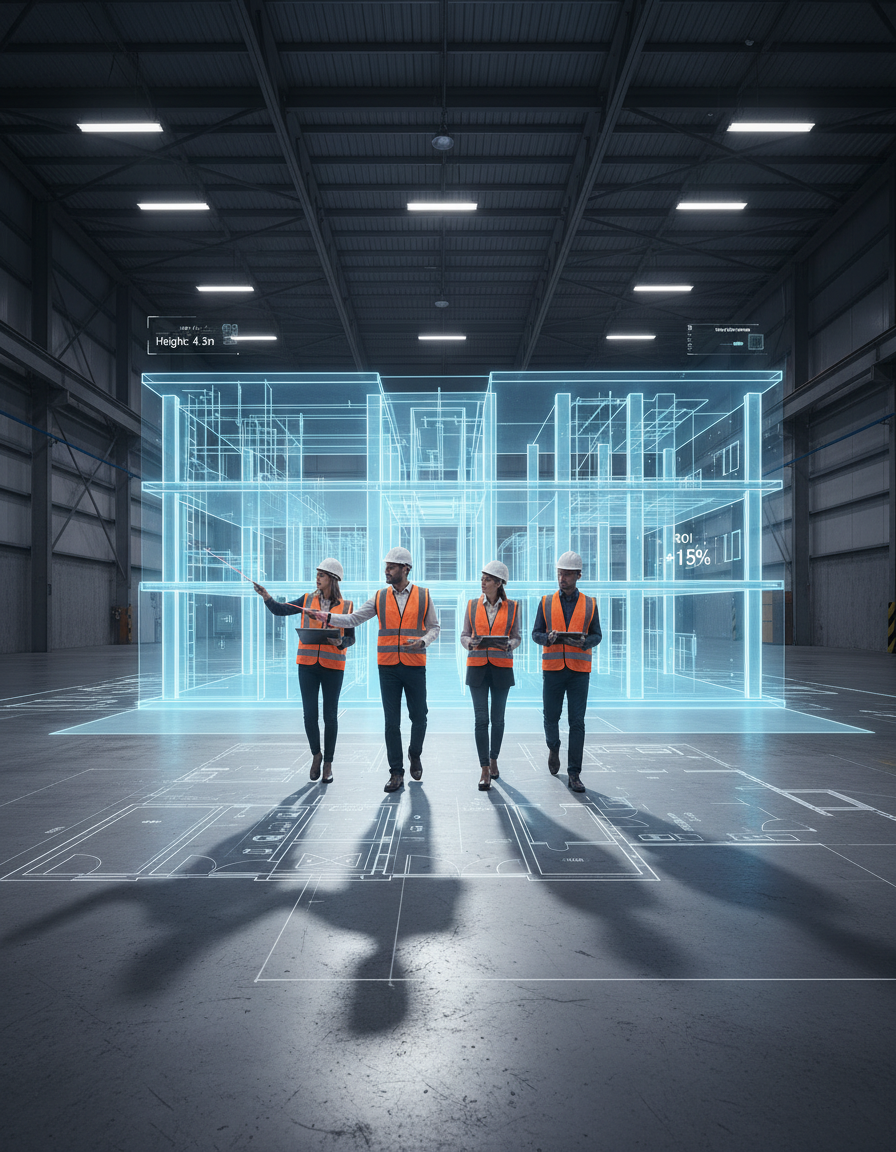
For decades, the development process followed a familiar path. Architects designed the building, plans were approved, contractors mobilized, and construction began. Only after the building started taking shape did teams fully understand how the design actually functioned in real life.
But today, the smartest developers are changing that process.
Instead of waiting until construction begins to discover design issues, forward-thinking development teams are now walking through their buildings before breaking ground. This new step in the design workflow is helping developers reduce risk, prevent costly construction changes, and move projects forward with far greater confidence.
In an industry where a single mistake can cost tens of thousands—or even millions—of dollars, developers are discovering that experiencing a building before construction begins may be one of the smartest investments they can make.
The Hidden Risks Developers Face Before Construction
Every development project carries risk.
Even the most experienced architects and engineers can encounter issues once a project moves from drawings to physical construction. Plans may appear flawless on paper, but the reality of a built environment often reveals challenges that are difficult to anticipate in advance.
Some of the most common construction issues developers face include:
• Circulation paths that feel tight or inefficient
• Room proportions that look good on plans but feel uncomfortable in reality
• Furniture layouts that interfere with movement
• Door placements that disrupt natural flow
• Sightlines that block key views or reduce openness
None of these problems are necessarily visible during the design phase. In fact, many of them only become obvious once walls start going up.
At that point, solving them can become extremely expensive.
This is why developers who prioritize construction risk reduction and design validation are turning to full-scale walkthrough environments before the first shovel hits the ground.
From Drawings to Spatial Reality
Architectural drawings are powerful tools, but they are still abstractions of reality.
A floor plan can show dimensions, relationships between rooms, and layout organization. A rendering can show textures, lighting, and aesthetics. But neither of these tools fully communicates how a space will feel when someone moves through it.
Human perception of space is influenced by movement, proportion, sightlines, and scale—elements that are difficult to fully evaluate through 2D drawings alone.
This is why full-scale walkthrough experiences are becoming one of the most valuable tools in modern development planning and architectural design validation.
When developers can physically walk through their project before construction begins, they gain immediate insight into:
• Circulation efficiency
• Room proportions
• Spatial relationships
• Layout functionality
• Overall design comfort
This type of spatial clarity transforms the design process from theoretical planning into practical decision-making.
Preventing Expensive Change Orders
One of the most expensive problems in construction is the dreaded change order.
Change orders often occur when a design decision that looked acceptable during the planning phase turns out to be problematic during construction. Adjusting these elements after work has started can trigger a cascade of delays, redesign costs, and coordination challenges.
For developers managing complex projects, even small mid-construction adjustments can add significant costs.
Common causes of change orders include:
• Layout conflicts
• Mechanical coordination issues
• circulation inefficiencies
• structural adjustments
• late design revisions
By experiencing the building before construction begins, developers and design teams can identify potential issues early and resolve them quickly.
This proactive approach allows teams to finalize layout decisions with confidence, dramatically reducing the likelihood of costly revisions later in the project.
Faster Decisions, Stronger Alignment
Beyond risk reduction, walking through a building before construction begins also improves one of the most important aspects of development: team alignment.
Large projects often involve multiple stakeholders, including developers, architects, consultants, investors, and clients. Each group interprets design drawings differently, which can lead to misunderstandings and delays.
When everyone experiences the project together in a full-scale walkthrough environment, the conversation changes.
Instead of debating drawings, the team can experience the space directly.
Decisions that once required long discussions suddenly become obvious. Developers can evaluate room sizes, architects can verify proportions, and clients can confirm their expectations in real time.
This shared understanding helps teams make faster, more confident decisions—something that is invaluable during the early phases of development.
A Small Investment That Protects Millions
Developers often invest millions of dollars into land acquisition, design, engineering, and construction. Yet many projects still rely on drawings alone to validate spatial decisions.
That approach is increasingly being replaced by a smarter strategy.
By integrating a full-scale architectural walkthrough step before construction begins, developers gain the ability to test their projects in advance.
This small step can prevent:
• costly redesigns
• construction delays
• inefficient layouts
• client dissatisfaction
• budget overruns
In other words, a few hours spent validating a design can protect the success of an entire development project.
The Future of Development Planning
The development industry is constantly evolving. New technologies and smarter workflows are helping teams build more efficiently, collaborate more effectively, and deliver better projects.
Full-scale walkthrough experiences represent one of the most exciting shifts in the architectural and development process.
They bridge the gap between imagination and reality.
Instead of relying solely on plans and models, developers can now experience their buildings before they exist.
This ability transforms planning from a speculative exercise into a strategic advantage.
And that is exactly why more developers are adding this step to their workflow.
Why Smart Developers Are Making This Move
The most successful developers understand that the goal is not simply to build a project—it is to build it correctly the first time.
Walking through a building before breaking ground offers developers a powerful opportunity to validate their vision, refine their layouts, and align their teams before construction begins.
This approach reduces uncertainty and replaces it with clarity.
And in a field where timing, cost control, and decision-making are critical, clarity is one of the most valuable resources a developer can have.
Experience Your Building Before Construction Begins
At The BluView, developers, architects, and builders can experience their projects through full-scale architectural walkthrough environments and immersive spatial visualization.
Instead of imagining the space through drawings alone, teams can walk through their buildings, evaluate layout decisions, and refine their design before construction begins.
This process helps developers:
• Reduce construction risk
• Prevent costly change orders
• Improve project alignment
• Validate design decisions early
• Build with greater confidence
Because the smartest developers are no longer waiting for construction to reveal design problems.
They are solving them before the first brick is laid.
Visit The BluView
📍 The BluView Experience
156 Route 59, Suffern, NY 10901 – Unit B4
📞 Phone: (845) 533-4473 Ext. 101
🌐 Website: www.thebluview.com
📷 Instagram: @thebluview_experience
Schedule your walkthrough and experience your building before it becomes reality.