
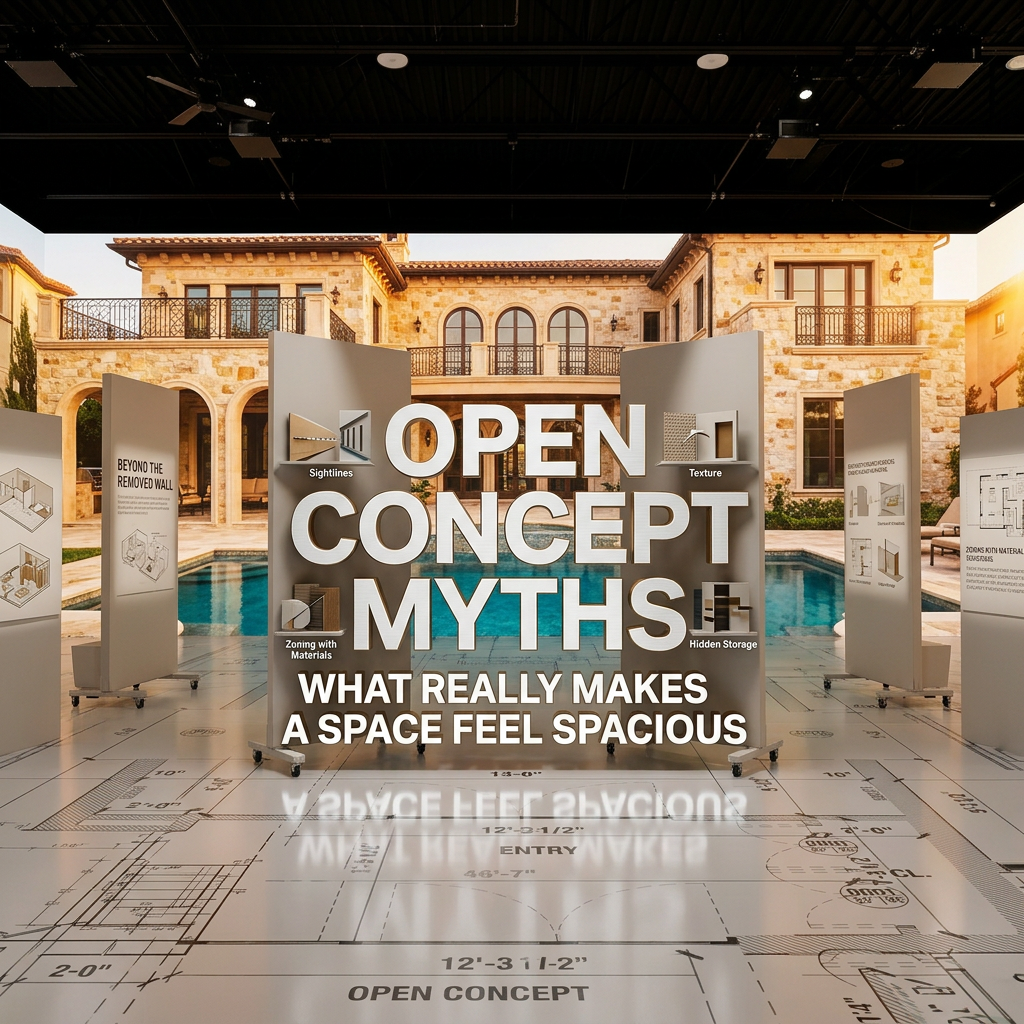
The open concept layout is often hailed as the gold standard for modern design. Remove the walls, let the space breathe, and voila—a spacious, open environment.
But here’s the reality: Open layouts don’t always create the feeling of freedom.
While it may seem counterintuitive, simply removing walls isn’t the secret to spaciousness. In fact, many open layouts can still feel cramped or disconnected. The key to creating a truly spacious feeling lies in understanding how proportions and flow shape a space.
At The BluView, we’ve learned that achieving a sense of freedom requires more than just removing barriers. It requires a deeper understanding of how space should move—and how the elements within it connect.
The Open Concept Fallacy
When most people think of an “open concept” space, they imagine wide, open spaces that stretch uninterrupted, providing a seamless flow from one area to another. The idea is simple: fewer walls equal more freedom.
But here’s the catch—open concept alone doesn’t guarantee a spacious feeling.
You might have a large, open room, but if the proportions are off or the flow is wrong, it can still feel:
- Disjointed rather than connected
- Empty rather than expansive
- Chaotic rather than comfortable
This is why the open concept myth is so prevalent: it’s easy to assume that taking down walls will fix the issue, but it doesn’t address the fundamental design principles that create space.
The Real Secret: Proportions and Flow
To make a space feel truly spacious, proportions and flow are the critical factors. Proportions refer to how the dimensions of a room relate to each other—how the height, width, and length balance out. Flow is the natural movement through the space: how one area leads into another.
These two elements, when designed correctly, create an experience that feels seamless, natural, and expansive. Without them, even the most open layouts can feel disconnected or constricting.
Why Proportions Matter More Than Open Walls
The true essence of space is in its proportions. A large room with high ceilings can feel expansive, but if the proportions aren’t balanced, it can also feel uncomfortable. A room with low ceilings, for example, might feel small, even if it’s relatively large in square footage.
In contrast, a smaller room with well-balanced proportions—such as high ceilings, correct room depth, and thoughtful furniture placement—can feel much more spacious than a larger, poorly proportioned one.
When proportions are balanced:
- The room feels comfortable
- Light distributes evenly throughout the space
- The eye naturally moves across the space without obstruction
When proportions are off:
- The space feels awkward or cramped
- Some areas feel underutilized, while others feel overcrowded
- The space fails to connect visually, creating a disjointed experience
The Power of Flow in Creating Space
Another crucial element is flow. Even in an open concept design, if there’s no clear movement between areas, the space will feel fragmented.
Think about the natural path you take when moving through a space. Do you have to turn awkwardly to get from one area to another? Do rooms feel like isolated pockets, disconnected from the rest of the layout? These interruptions in flow create a sense of constriction, even in large, open spaces.
Good flow:
- Guides movement naturally
- Helps spaces feel connected and cohesive
- Keeps you from feeling lost or unsure where to go next
Without proper flow:
- You’ll feel resistance as you move from room to room
- The space will feel awkward, even if it looks beautiful
- You may hesitate in certain areas, disrupting the overall experience
Light and Transition: The Finishing Touches
Finally, light and transitions play an essential role in creating the illusion of space. Light breathes life into a room, and how light is distributed can drastically change how spacious a room feels.
Bright, even lighting can make a room feel expansive, while dark, uneven lighting can make it feel smaller. Additionally, the transitions between spaces are critical. When transitions are smooth and seamless, the space feels connected and fluid. But when transitions are jarring or poorly planned, even an open layout can feel disconnected.
Open Concept Is Not the One-Size-Fits-All Solution
At The BluView, we’ve learned that open concept design is not always the answer to creating spaciousness. Rather, it’s about understanding the fundamental principles of proportion, flow, and light that will truly elevate a space.
While removing walls may be part of the solution, it’s the way the remaining space is designed that will ultimately determine how expansive it feels. Thoughtful attention to detail in proportions, smooth transitions, and the effective use of light will ensure that any layout—open or not—feels luxurious, comfortable, and spacious.
Why the Right Design Matters
Design isn’t just about visual appeal; it’s about creating an experience. A well-designed space should:
- Feel intuitive
- Guide movement naturally
- Enhance your daily experience without you thinking about it
When everything aligns—when proportions, flow, and light are in harmony—the result is a space that feels like it was built just for you. Whether you’re designing an open concept home or a more traditional layout, understanding these principles is key to creating the sense of freedom and luxury you desire.
The BluView Approach to Open Concept Design
At The BluView, we don’t just design spaces based on trends—we create spaces that function. We take the time to ensure:
- Proportions are perfectly balanced
- Flow is natural and seamless
- Every detail is considered to create the best possible experience
Our goal is to deliver a space that not only looks good but feels right every time you walk through it. Open concept is just one tool—but thoughtful, intentional design is what creates a truly luxurious space.
The Takeaway
When it comes to space, it’s not just about how open it is—it’s about how it feels. Open concepts can work, but only when proportions and flow are considered thoughtfully. Understanding these principles will allow you to create spaces that feel expansive, connected, and elevated—whether you’re removing walls or keeping them intact.