
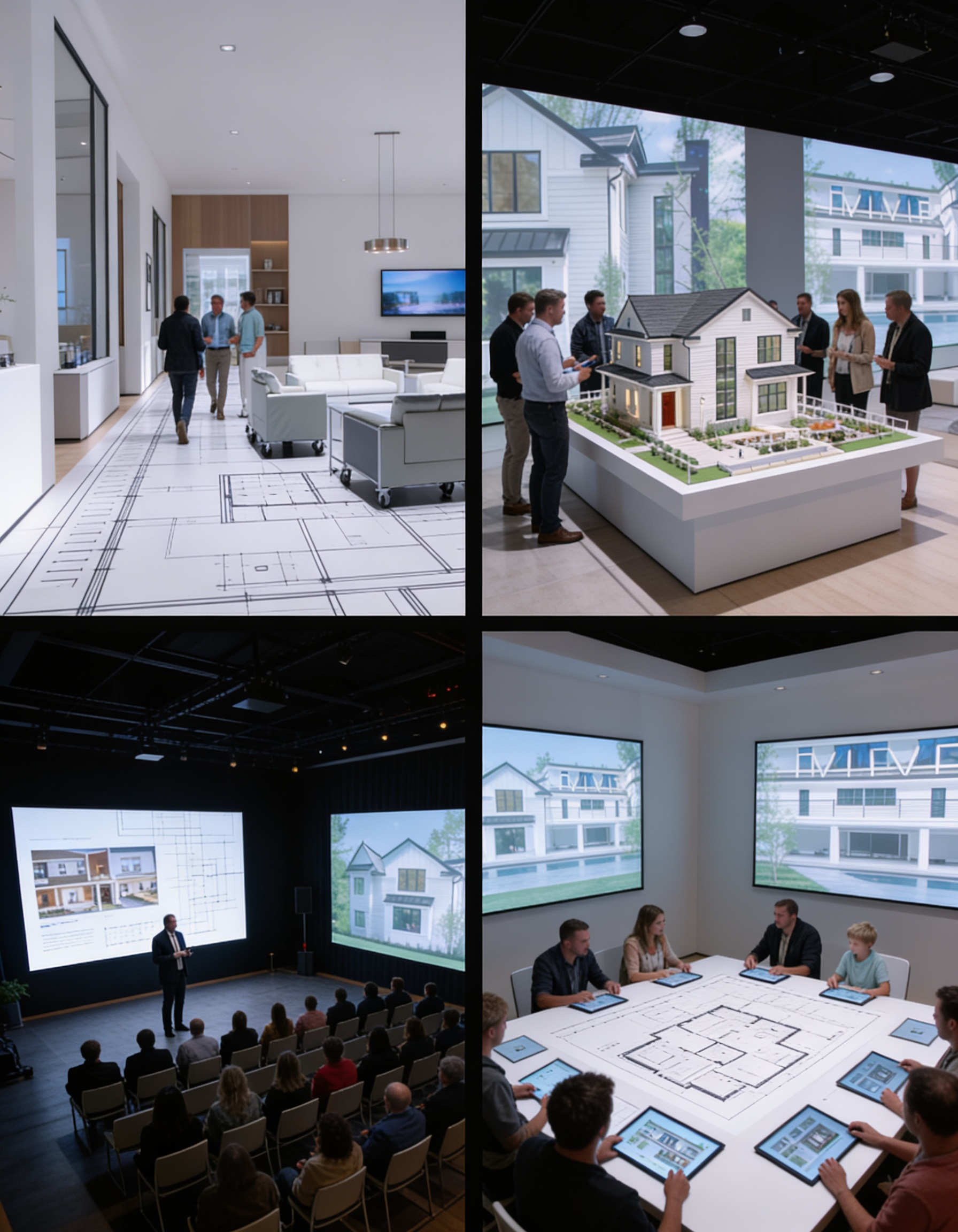
For decades, construction planning has relied on blueprints, elevations, and renderings to tell the story of a future space. While these tools are essential, they ask clients and stakeholders to imagine something they’ve never physically experienced. Even the most detailed plans still leave room for misinterpretation, assumptions, and costly surprises.
Immersive design changes that narrative completely. Instead of imagining a space, clients can walk through it—at full scale—before construction ever begins.
The Limitations of Traditional Planning Methods
Blueprints are technical by nature. They communicate dimensions, materials, and structure, but they don’t communicate feeling. Ceiling heights, circulation paths, sightlines, and spatial flow are difficult to fully grasp on paper or even on a screen.
This gap often leads to misunderstandings. Clients approve designs they don’t fully understand. Designers assume intent that wasn’t clearly communicated. Builders move forward only to discover issues once walls begin to rise. By then, changes are expensive, stressful, and time-consuming.
Immersive walkthroughs eliminate this gap by translating technical plans into real, human-scale experiences.
Turning Drawings Into Real-World Experiences
Full-scale immersive visualization allows project teams to step inside a design exactly as it will exist. Walls feel like walls. Rooms feel as large—or as small—as they truly are. The relationship between spaces becomes instantly clear.
This shift from viewing to experiencing is powerful. Clients no longer need architectural fluency to understand their project. They can react naturally, the same way they would in a completed building. If something feels off, it’s immediately noticeable—and easily corrected while the project is still in the planning phase.
Better Feedback Leads to Better Design
One of the greatest advantages of immersive design is the quality of feedback it generates. Instead of vague comments like “something feels wrong,” clients can pinpoint specific concerns: circulation feels tight, the layout doesn’t support workflow, or a space doesn’t feel as inviting as expected.
Designers can respond with precision. Adjustments become intentional, not speculative. Each iteration improves the project instead of introducing new uncertainty. The result is a design that reflects real needs, real movement, and real use—not assumptions.
Aligning Clients, Designers, and Builders Early
Misalignment between teams is one of the most common causes of delays and disputes. Immersive walkthroughs bring everyone into the same conversation, at the same time, inside the same space.
When clients, architects, engineers, and builders experience the project together, decisions happen faster and with greater confidence. Questions are resolved immediately. Expectations are aligned before construction begins. This shared understanding creates smoother transitions from design to build and reduces friction across the entire project lifecycle.
Catching Issues Before They Become Problems
Many construction issues aren’t technical—they’re spatial. A door swing that interrupts flow, a ceiling that feels lower than expected, or a layout that doesn’t support how people actually use the space.
Immersive walkthroughs expose these issues early, when they are easy and inexpensive to fix. Identifying problems at this stage prevents rework, reduces change orders, and protects both budget and timeline.
This proactive approach turns planning into risk management.
A More Confident Approval Process
Approvals often stall because decision-makers don’t feel confident in what they’re approving. Immersive design removes hesitation by replacing uncertainty with clarity.
When stakeholders can walk through a project before signing off, approvals become faster and more decisive. Planning boards, investors, and clients gain confidence because they understand the outcome—not just in theory, but in experience.
This clarity keeps projects moving forward without unnecessary delays.
Redefining What Planning Means
Immersive design represents a fundamental shift in construction planning. It’s no longer about interpreting drawings—it’s about experiencing intent. It brings design closer to reality, bridges communication gaps, and empowers better decision-making at every stage.
At The BluView, immersive walkthroughs aren’t just a tool—they’re a process. A process that transforms uncertainty into confidence and ideas into experiences long before construction begins.
When planning becomes something you can walk through, the results speak for themselves.