
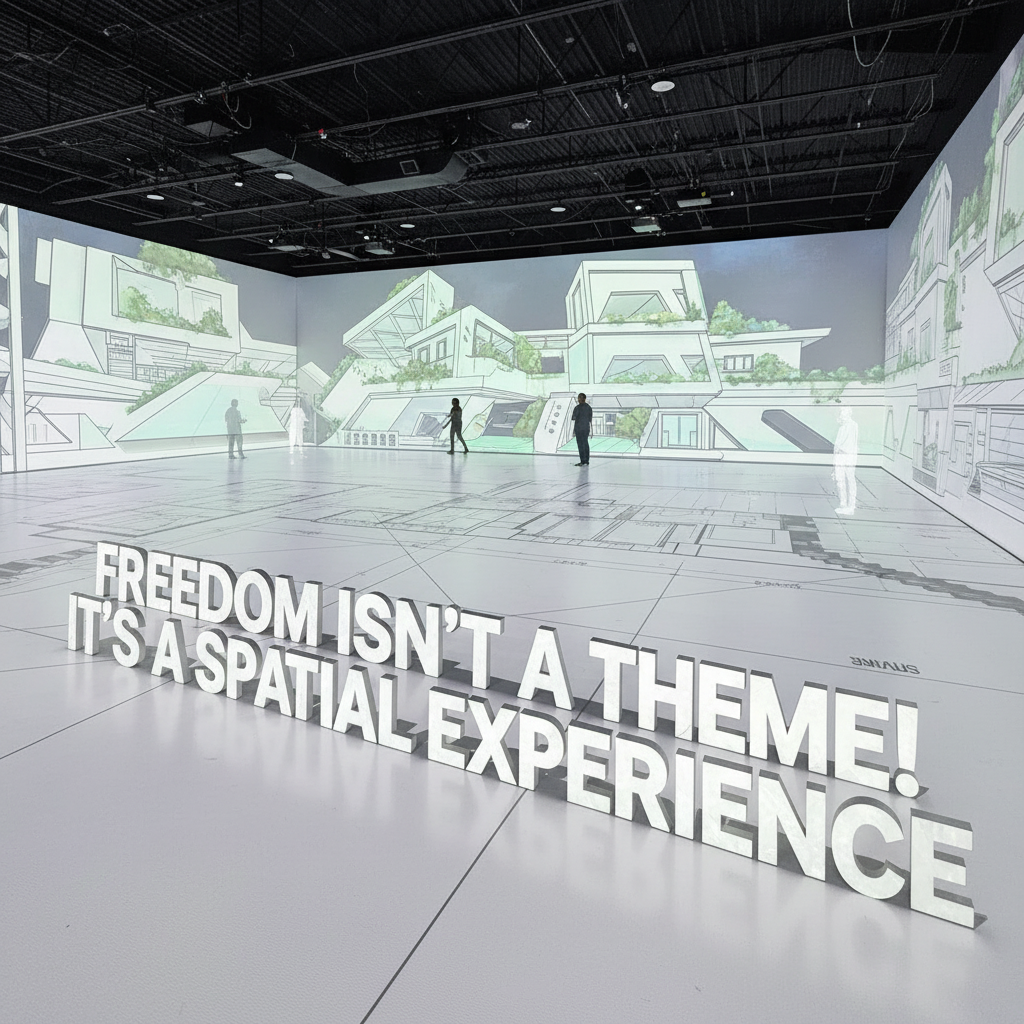
Freedom is one of the most powerful ideas we connect to space.
Especially during Passover, when the concept of freedom is front and center, people naturally reflect on what it means to move from restriction to openness. But here’s something most don’t realize:
Freedom in design is not a visual concept—it’s a spatial experience.
At The BluView, we see this every day. Spaces that look beautiful on paper can still feel tight, confined, or disconnected in real life. And others, often simpler in design, feel expansive, calm, and elevated the moment you step into them.
The difference comes down to one thing: how the space is experienced.
Why Most Spaces Feel Restrictive—Even When They Look Open
A common assumption in modern design is that open layouts automatically create a sense of freedom.
Remove walls. Increase square footage. Add glass.
But many of these “open” spaces still feel limiting.
Why?
Because openness is not defined by how much space you have—it’s defined by how that space behaves.
You can have:
- Large rooms that feel disconnected
- Open plans that lack direction
- Expansive areas that still feel uncomfortable
This is where most projects fall short. They are designed visually, not experientially.
The Difference Between Looking Open and Feeling Free
There’s a subtle but critical difference between a space that looks open and one that actually feels free.
A space that looks open relies on:
- Minimal walls
- Clean lines
- Visual simplicity
A space that feels free is built on:
- Thoughtful proportions
- Natural transitions
- Intentional flow
- Balanced scale
When these elements are aligned, the experience becomes effortless. You don’t think about the space—you move through it naturally.
That’s real freedom.
The Role of Light in Creating Spatial Freedom
Light is one of the most powerful tools in creating a sense of liberation.
Not just brightness—but how light moves through a space.
In high-end design:
- Light guides movement
- It highlights transitions
- It enhances depth and dimension
- It creates emotional clarity
Poorly designed lighting, on the other hand, can make even large spaces feel heavy and enclosed.
The goal is not just to add light—but to design with it.
Flow: The Hidden Language of Freedom
Flow is what turns a layout into an experience.
It’s how one space leads into another. How movement feels. How the environment responds as you navigate it.
When flow is right:
- You don’t hesitate
- You don’t feel confined
- You intuitively know where to go
When it’s wrong:
- You feel resistance
- Transitions feel abrupt
- The space loses its rhythm
This is the difference between a space that supports you—and one that restricts you.
Spatial Transitions That Elevate the Experience
Freedom is not just about open areas—it’s about how you move between them.
Transitions matter.
A well-designed transition:
- Builds anticipation
- Creates contrast
- Enhances the journey
Instead of everything being exposed at once, the space reveals itself gradually. This creates depth, interest, and a stronger emotional connection.
This is what separates basic layouts from elevated, luxury spatial experiences.
Why Freedom Starts Before Construction
Most people only evaluate their space visually before building.
They approve plans. Review renderings. Make decisions based on appearance.
But freedom cannot be fully understood visually—it must be experienced.
This is where early spatial validation becomes critical.
When you walk through a design (physically or virtually), you immediately feel:
- Whether the space is open or restrictive
- Whether flow is natural or forced
- Whether the design supports real life
This is how you ensure your space delivers what it promises.
The Emotional Impact of a Free-Flowing Space
When a space is designed correctly, the emotional impact is immediate.
You feel:
- Calm
- Clarity
- Openness
- Ease
There’s no tension. No friction. No confusion.
That’s what true luxury feels like—not just visually impressive, but emotionally aligned.
And that’s what most people are really searching for, whether they realize it or not.
The BluView Approach to Designing Freedom
At The BluView, we don’t treat freedom as a design style.
We treat it as a measurable experience.
We help clients:
- Move beyond visual design into experiential design
- Validate how spaces feel before they’re built
- Identify hidden constraints in layouts
- Create environments that feel expansive and natural
Because the goal isn’t just to create something that looks good—it’s to create something that feels right.
This Passover, Think Beyond the Surface
Passover is a reminder of transition—from limitation to freedom.
Your space should reflect that same transformation.
Not just visually, but experientially.
Because at the end of the day, freedom isn’t about how a space looks.
It’s about how it makes you feel when you move through it.