
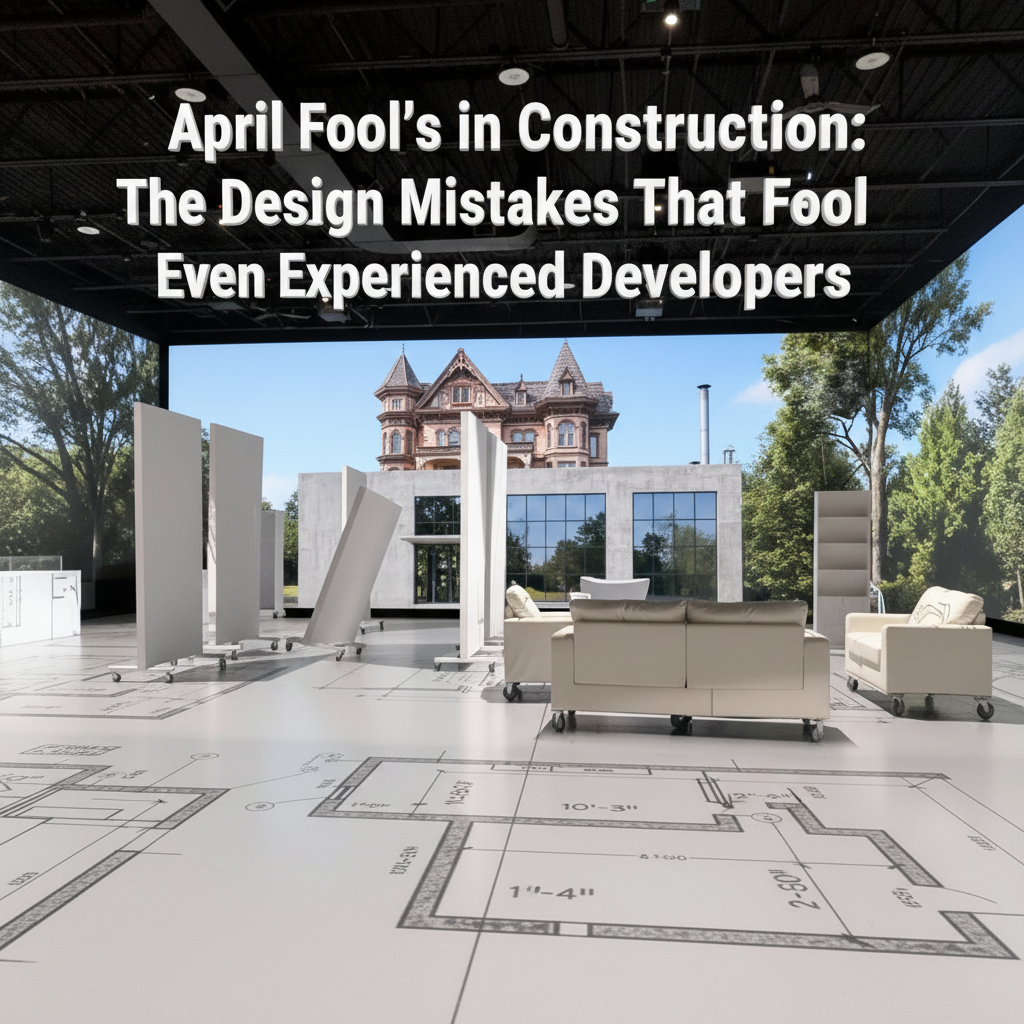
April Fool’s Day is all about surprises—but in construction, surprises are the last thing you want.
What’s ironic is that some of the biggest (and most expensive) mistakes don’t come from inexperience. They come from designs that look perfectly fine on paper… but fail the moment they’re built.
At The BluView, we’ve seen seasoned developers, architects, and property owners fall into the same traps—not because they lack knowledge, but because certain architectural design errors are incredibly deceptive.
Let’s break down the most common ones—and how to avoid being fooled.
The Illusion of a “Perfect” Floor Plan
On paper, everything aligns.
Rooms fit neatly. Dimensions check out. The layout looks efficient. But once built, something feels off.
This is one of the most common building layout issues:
- Spaces that technically meet size requirements but feel too tight
- Rooms that lack presence despite adequate square footage
- Layouts that feel disconnected rather than cohesive
The mistake isn’t in the math—it’s in the experience.
A plan can be technically correct and still fail emotionally and functionally in real life.
When Scale Lies to You
A classic April Fool’s trick in design is scale distortion.
Looking at a drawing, a 3-foot hallway or a 10×12 room might seem perfectly fine. But when you physically experience it, it can feel:
- Narrow and restrictive
- Compressed and uncomfortable
- Out of proportion with surrounding spaces
This is one of the most overlooked construction mistakes to avoid.
Without experiencing the space at full scale, it’s easy to approve dimensions that don’t translate well in reality.
Flow That Looks Good—but Doesn’t Work
Flow is invisible on paper.
A layout might show clear paths, but once built, movement can feel awkward or interrupted.
Common flow-related mistakes include:
- Door placements that interfere with circulation
- Awkward transitions between rooms
- Dead zones or wasted space
- Overlapping functional areas
These are subtle but powerful pre construction risks that directly impact how a space is used every day.
The “Furniture Fit” Trap
Another common mistake that fools even experienced developers is assuming furniture will naturally fit.
On drawings, everything seems aligned. But in reality:
- Walkways become too tight once furniture is placed
- Key pieces block natural movement
- Rooms lose their intended functionality
This is where architectural design errors turn into daily frustrations.
Designing without validating real-life use leads to spaces that look complete—but don’t actually work.
Lighting That Doesn’t Perform
Lighting plans often look impressive on paper.
But light behaves differently in real environments.
Mistakes include:
- Poor natural light distribution
- Overlit or underlit areas
- Shadows that disrupt the space
- Misaligned focal lighting
These issues aren’t always visible in drawings—but they become obvious once the space exists.
Another reason why relying solely on visuals can be misleading.
Why Even Experienced Developers Get Fooled
Experience doesn’t eliminate blind spots.
In fact, familiarity can create overconfidence.
Developers who have completed multiple projects may:
- Trust plans without fully validating them
- Rely on past assumptions instead of current experience
- Skip deeper analysis to move faster
This is exactly how even professionals fall into these design traps.
Because the mistakes aren’t obvious—until it’s too late.
The Real Cost of Being Fooled
Design mistakes don’t just affect aesthetics—they impact:
- Construction costs through change orders
- Project timelines through delays
- Long-term usability and satisfaction
- Property value and perceived quality
Every overlooked issue compounds over time.
That’s why identifying construction mistakes to avoid early is critical to protecting your investment.
The Solution: Experience Before You Build
So how do you avoid being fooled?
You don’t rely on plans alone.
You experience the space before it’s built.
This is where walkthroughs become essential.
Whether physical or virtual, a full-scale walkthrough allows you to:
- Feel proportions accurately
- Test flow and movement
- Identify functional conflicts
- Validate design decisions with confidence
It transforms assumptions into certainty.
Walkthroughs Expose What Drawings Hide
When you walk a space, everything becomes clear.
What looked good on paper may suddenly reveal:
- Tight transitions
- Misaligned elements
- Poor spatial relationships
- Functional inefficiencies
This is the most effective way to eliminate pre construction risk and ensure your design performs in real life.
The BluView Approach to Smarter Design
At The BluView, we approach every project with one goal:
Make sure nothing surprises you after construction starts.
We help clients:
- Identify hidden design flaws
- Validate layouts through real experience
- Refine details before approval
- Build with clarity and confidence
Because great design isn’t just about how it looks—it’s about how it works, feels, and performs.
Don’t Let Your Project Be the April Fool
April Fool’s is fun once a year—but not in construction.
Before you move forward with any project, take a step back and ask:
Have I truly experienced this space?
Because the biggest mistakes are the ones that don’t look like mistakes—until they’re built.
Avoid the trap. Validate before you build. And make sure your project delivers exactly what you expect.