
Everyone has experienced it.
You walk into a space for the first time… and something just feels right.
The proportions feel balanced.
The light flows naturally.
The layout makes sense without thinking about it.
And then there are other spaces.
On paper, they look perfect. The design checks every box. The plans are clean, the renderings are impressive… but when you step inside, something feels off.
You can’t always explain it.
But you feel it immediately.
This is the difference between designing a building… and understanding how it actually feels to exist inside it.
The Hidden Psychology Behind Great Spaces
Architecture is not just technical.
It’s psychological.
The way a space feels is influenced by a combination of subtle elements:
• proportions of rooms and ceilings
• natural and artificial light
• circulation and movement
• sightlines and visual connections
• transitions between spaces
Together, these elements create what is known as building design psychology.
When they are aligned correctly, a space feels natural, comfortable, and intuitive.
When they are slightly off, even if everything looks perfect on paper, the space can feel awkward, tight, or disconnected.
This is why architectural spatial experience matters more than drawings alone.
Why Perfect Plans Don’t Guarantee Perfect Spaces
Architectural plans are designed to communicate logic.
They show dimensions, structure, and relationships between rooms.
But they do not fully communicate feeling.
A floor plan can tell you a room is 12 by 14 feet.
But it cannot tell you how that room will feel when you stand inside it.
A rendering can show you materials and lighting.
But it cannot replicate how light actually moves through a space as you walk.
This gap is where many design challenges occur.
Because a building can be technically correct…
and still feel wrong.
The Role of Spatial Flow
One of the most important factors in how a building feels is spatial flow architecture.
Flow refers to how people move through a space.
Does the layout guide you naturally from one area to another?
Do rooms connect intuitively?
Does movement feel smooth or interrupted?
When flow is designed correctly, people don’t even notice it.
They simply move through the space effortlessly.
But when flow is off, it creates subtle discomfort.
You hesitate. You adjust your path. You feel resistance.
These issues are rarely obvious in drawings.
But they become clear the moment you walk through a space.
Proportion: The Silent Influence
Proportion is another critical element that defines how a space feels.
Two rooms with the same square footage can feel completely different depending on ceiling height, width, and layout.
A slightly narrow room can feel restrictive.
A slightly oversized room can feel empty or inefficient.
These differences are often too subtle to detect on paper.
But they are immediately noticeable in real space.
This is why proportion plays such a powerful role in immersive design validation.
It must be experienced, not just measured.
Light and Visual Experience
Light is one of the most emotional aspects of architecture.
The way natural light enters a space, reflects off surfaces, and changes throughout the day has a profound impact on how a building feels.
A well-lit space feels open and inviting.
A poorly lit space can feel closed and uncomfortable.
While renderings attempt to simulate lighting, they cannot fully replicate the dynamic nature of light in real environments.
This is another reason why architectural spatial experience is essential.
Because light is not static.
It is something you experience as you move.
Why Some Designs Only Work in Theory
Many designs are created in controlled environments — on screens, in offices, through software.
But real life is not controlled.
People move unpredictably. They interact with space in dynamic ways. They experience architecture through motion, not just observation.
This is why some designs work perfectly in theory but fail in practice.
They were never tested in real spatial conditions.
They were never experienced at full scale.
And without that step, small misalignments can go unnoticed until it is too late.
The Missing Step: Experiencing the Space
To truly understand whether a building “feels right,” it must be experienced.
Not imagined.
Not interpreted.
Experienced.
This is where immersive design validation transforms the process.
By stepping into a full-scale representation of a project, architects and developers can evaluate how the space actually performs.
They can walk through rooms, test circulation, observe sightlines, and feel proportions.
Within minutes, they understand what works… and what needs refinement.
From Uncertainty to Confidence
One of the biggest challenges in architecture is uncertainty.
Will the client like the space?
Will the layout feel right?
Will the design perform as expected?
These questions often remain unanswered until construction is complete.
But when a design is experienced before it is built, that uncertainty disappears.
Developers gain confidence in their investment.
Architects validate their vision.
Clients understand the space instantly.
This clarity leads to better decisions, faster approvals, and stronger outcomes.
The Future of Design Is Experiential
Architecture is evolving.
The industry is moving beyond drawings and renderings toward a more experiential approach.
Instead of relying on imagination, designers are using tools that allow them to test and validate their ideas in real space.
This shift is redefining how buildings are created.
It is closing the gap between concept and reality.
And it is ensuring that buildings don’t just look good on paper…
They feel right in real life.
Experience Your Design Before It’s Built
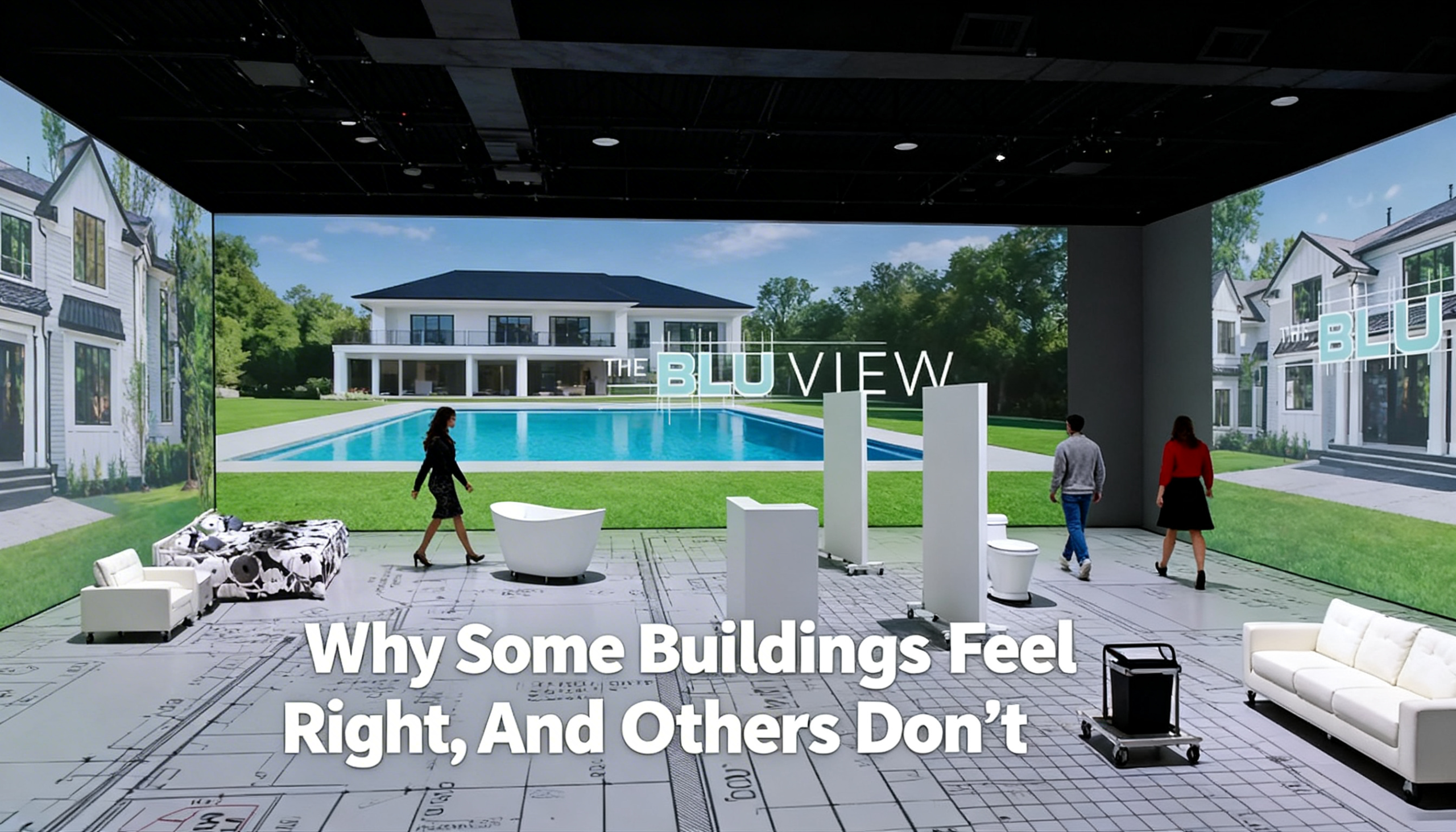
At The BluView, architects, developers, and clients can step inside their projects through immersive full-scale environments designed for true spatial experience.
Here, designs are no longer abstract.
They become real.
You can walk through your building, feel the proportions, test the flow, and understand the space exactly as it will be experienced once constructed.
This process allows teams to refine their designs, improve communication, and move forward with confidence.
Because the difference between a good building and a great one…
is how it feels.
Visit The BluView
📍 The BluView Experience
156 Route 59, Suffern, NY 10901 – Unit B4
📞 Phone: (845) 533-4473 Ext. 101
📷 Instagram: @thebluview_experience
Everyone has experienced it.
You walk into a space for the first time… and something just feels right.
The proportions feel balanced.
The light flows naturally.
The layout makes sense without thinking about it.
And then there are other spaces.
On paper, they look perfect. The design checks every box. The plans are clean, the renderings are impressive… but when you step inside, something feels off.
You can’t always explain it.
But you feel it immediately.
This is the difference between designing a building… and understanding how it actually feels to exist inside it.
The Hidden Psychology Behind Great Spaces
Architecture is not just technical.
It’s psychological.
The way a space feels is influenced by a combination of subtle elements:
• proportions of rooms and ceilings
• natural and artificial light
• circulation and movement
• sightlines and visual connections
• transitions between spaces
Together, these elements create what is known as building design psychology.
When they are aligned correctly, a space feels natural, comfortable, and intuitive.
When they are slightly off, even if everything looks perfect on paper, the space can feel awkward, tight, or disconnected.
This is why architectural spatial experience matters more than drawings alone.
Why Perfect Plans Don’t Guarantee Perfect Spaces
Architectural plans are designed to communicate logic.
They show dimensions, structure, and relationships between rooms.
But they do not fully communicate feeling.
A floor plan can tell you a room is 12 by 14 feet.
But it cannot tell you how that room will feel when you stand inside it.
A rendering can show you materials and lighting.
But it cannot replicate how light actually moves through a space as you walk.
This gap is where many design challenges occur.
Because a building can be technically correct…
and still feel wrong.
The Role of Spatial Flow
One of the most important factors in how a building feels is spatial flow architecture.
Flow refers to how people move through a space.
Does the layout guide you naturally from one area to another?
Do rooms connect intuitively?
Does movement feel smooth or interrupted?
When flow is designed correctly, people don’t even notice it.
They simply move through the space effortlessly.
But when flow is off, it creates subtle discomfort.
You hesitate. You adjust your path. You feel resistance.
These issues are rarely obvious in drawings.
But they become clear the moment you walk through a space.
Proportion: The Silent Influence
Proportion is another critical element that defines how a space feels.
Two rooms with the same square footage can feel completely different depending on ceiling height, width, and layout.
A slightly narrow room can feel restrictive.
A slightly oversized room can feel empty or inefficient.
These differences are often too subtle to detect on paper.
But they are immediately noticeable in real space.
This is why proportion plays such a powerful role in immersive design validation.
It must be experienced, not just measured.
Light and Visual Experience
Light is one of the most emotional aspects of architecture.
The way natural light enters a space, reflects off surfaces, and changes throughout the day has a profound impact on how a building feels.
A well-lit space feels open and inviting.
A poorly lit space can feel closed and uncomfortable.
While renderings attempt to simulate lighting, they cannot fully replicate the dynamic nature of light in real environments.
This is another reason why architectural spatial experience is essential.
Because light is not static.
It is something you experience as you move.
Why Some Designs Only Work in Theory
Many designs are created in controlled environments — on screens, in offices, through software.
But real life is not controlled.
People move unpredictably. They interact with space in dynamic ways. They experience architecture through motion, not just observation.
This is why some designs work perfectly in theory but fail in practice.
They were never tested in real spatial conditions.
They were never experienced at full scale.
And without that step, small misalignments can go unnoticed until it is too late.
The Missing Step: Experiencing the Space
To truly understand whether a building “feels right,” it must be experienced.
Not imagined.
Not interpreted.
Experienced.
This is where immersive design validation transforms the process.
By stepping into a full-scale representation of a project, architects and developers can evaluate how the space actually performs.
They can walk through rooms, test circulation, observe sightlines, and feel proportions.
Within minutes, they understand what works… and what needs refinement.
From Uncertainty to Confidence
One of the biggest challenges in architecture is uncertainty.
Will the client like the space?
Will the layout feel right?
Will the design perform as expected?
These questions often remain unanswered until construction is complete.
But when a design is experienced before it is built, that uncertainty disappears.
Developers gain confidence in their investment.
Architects validate their vision.
Clients understand the space instantly.
This clarity leads to better decisions, faster approvals, and stronger outcomes.
The Future of Design Is Experiential
Architecture is evolving.
The industry is moving beyond drawings and renderings toward a more experiential approach.
Instead of relying on imagination, designers are using tools that allow them to test and validate their ideas in real space.
This shift is redefining how buildings are created.
It is closing the gap between concept and reality.
And it is ensuring that buildings don’t just look good on paper…
They feel right in real life.
Experience Your Design Before It’s Built
At The BluView, architects, developers, and clients can step inside their projects through immersive full-scale environments designed for true spatial experience.
Here, designs are no longer abstract.
They become real.
You can walk through your building, feel the proportions, test the flow, and understand the space exactly as it will be experienced once constructed.
This process allows teams to refine their designs, improve communication, and move forward with confidence.
Because the difference between a good building and a great one…
is how it feels.
Visit The BluView
📍 The BluView Experience
156 Route 59, Suffern, NY 10901 – Unit B4
📞 Phone: (845) 533-4473 Ext. 101
📷 Instagram: @thebluview_experience
Experience your design before it becomes reality.