
Approvals don’t stall because projects are bad.
They stall because projects are hard to understand.
Planning boards, zoning boards, and municipal committees are often asked to approve complex developments based on flat drawings, elevations, and written descriptions. Even experienced board members must imagine scale, impact, and flow — and imagination leaves room for hesitation.
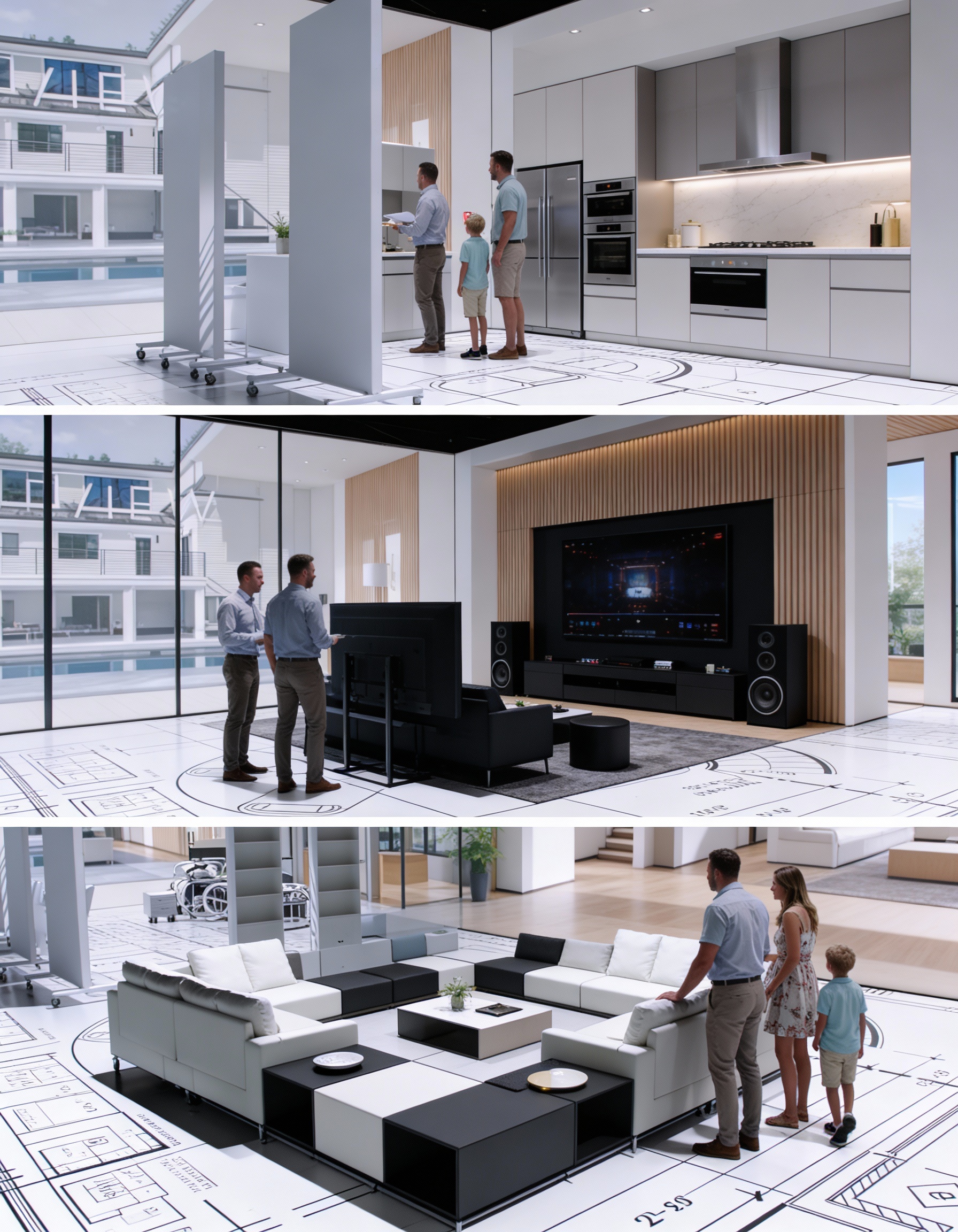
At The BluView Experience, we remove that hesitation by allowing decision-makers to walk the project at full scale before it’s built.
Why the Approval Process Slows Down
Most approval delays come from uncertainty, not opposition. Board members want to do their jobs responsibly. They ask questions because they need clarity.
Common sticking points include:
• Building scale and massing
• Relationship to surrounding properties
• Pedestrian and vehicular circulation
• Entry points and public-facing spaces
• Overall neighborhood impact
When these elements are difficult to visualize, boards ask for revisions, additional meetings, or further studies — extending timelines and increasing costs.
From Drawings to Understanding
Architectural drawings communicate intent, but they don’t communicate experience. A line on a plan can’t show how a building feels at street level. An elevation can’t fully explain how a space functions when people move through it.
BluView turns abstract information into physical understanding. Decision-makers don’t have to imagine the project — they experience it.
Walking the Project Builds Confidence
When planning board members can walk a project at full scale, the conversation changes.
Instead of asking “What will this feel like?” they say “I understand this now.”
Walking the space allows boards to:
• Grasp scale immediately
• Understand circulation and access
• Visualize public interaction with the building
• Feel comfortable with their decision
Confidence accelerates approvals.
Reducing Back-and-Forth and Revisions
One of the biggest benefits of using BluView during the approval process is efficiency. Questions that might take weeks to resolve through revised drawings can be addressed in real time.
This reduces:
• Multiple submission rounds
• Repeated hearings
• Miscommunication between teams
• Costly redesigns
The result is a smoother path from proposal to approval.
Transparency Builds Trust With Municipalities
Boards respond positively to transparency. When developers and architects invite decision-makers to experience a project fully, it signals confidence and preparedness.
BluView demonstrates:
• Respect for the approval process
• Willingness to address concerns openly
• Commitment to community impact
• Professionalism and accountability
That trust goes a long way in approval settings.
Aligning All Stakeholders Early
Approvals involve more than boards. Investors, community representatives, engineers, and consultants all play a role. BluView allows everyone to see the same project, at the same scale, at the same time.
This alignment minimizes internal disagreement and strengthens the project’s presentation during public review.
Stronger Presentations Lead to Faster Outcomes
A BluView walkthrough transforms an approval meeting from a presentation into an experience. Instead of reacting to drawings, decision-makers engage with the project.
That engagement leads to:
• Clearer discussions
• Fewer objections
• More decisive outcomes
Projects move forward because understanding replaces doubt.
Approvals Are About Confidence, Not Just Compliance
Meeting code requirements is essential — but approvals ultimately depend on confidence. Boards need to feel comfortable saying yes.
When they can walk the project, see how it functions, and understand its impact, that comfort comes naturally.
Turning “Maybe” Into “Approved”
At The BluView Experience, we help teams turn uncertainty into clarity and hesitation into approval.
By allowing planning boards to experience projects instead of imagining them, we give developments a powerful advantage — one that saves time, reduces friction, and keeps projects moving forward.
Because when people can walk the project, saying yes becomes easier.