
Every construction project begins with excitement. Architects finalize the plans, developers approve the budgets, and clients imagine the moment the building will finally come to life. Drawings are polished, renderings look stunning, and everything appears ready for construction to begin.
But experienced developers and architects know something important.
Even the most beautiful design on paper can hide costly surprises.
Hallways that feel too narrow.
Door placements that interrupt circulation.
Rooms that look spacious in drawings but feel tight in real life.
These issues are not unusual. In fact, they are among the most common reasons projects face expensive mid-construction changes.
And sometimes, discovering them can cost thousands — or even far more.
But what if those problems could be discovered in just ten minutes?
Why Small Spatial Mistakes Become Expensive Construction Problems
Architecture is a complex process. Drawings, floor plans, and digital models are essential tools for visualizing a building before it exists. They help teams coordinate structure, systems, and layouts.
However, drawings have limitations.
A floor plan shows measurements and relationships between rooms, but it cannot fully communicate how a space will feel when someone walks through it. Human perception of space depends on movement, perspective, and scale — elements that are difficult to evaluate on paper.
This is why many projects encounter architectural layout mistakes during construction.
A hallway that looked acceptable on a plan suddenly feels uncomfortable. A kitchen island blocks circulation more than expected. A doorway interrupts the natural movement between rooms.
Once construction has started, fixing these issues can trigger costly change orders, schedule delays, and coordination challenges between contractors and designers.
These are the types of construction cost mistakes developers want to avoid.
The Power of a Simple Walkthrough
Imagine stepping into your building before construction begins.
Not through drawings.
Not through a digital screen.
But by walking through the design at true scale.
Walls appear at their real height.
Rooms stretch to their exact dimensions.
Hallways feel exactly as they would in the finished building.
This is the moment where a simple 10-minute walkthrough can reveal insights that weeks of drawings might miss.
Architects instantly notice how circulation flows between rooms. Developers understand the proportions of the space. Clients see how the layout actually feels instead of trying to imagine it.
Suddenly, potential issues become obvious.
And when problems are discovered early, they can be solved quickly — before construction locks them into place.
The Hidden Spatial Problems That Drawings Don’t Show
Some design challenges only appear when someone physically moves through a space.
These include subtle but important factors like circulation flow, spatial comfort, and sightlines.
For example:
A hallway might technically meet code requirements but still feel tight when walking through it.
A bedroom layout may appear balanced on paper but create awkward furniture placement.
A doorway might disrupt a natural path between rooms.
These are the kinds of architectural layout mistakes that often remain invisible during the design phase.
But when experienced through a full-scale walkthrough, they become immediately clear.
This is why architecture walkthrough validation is becoming an essential step in modern pre-construction planning.
Faster Decisions and Better Design Confidence
Another powerful benefit of a short walkthrough is how quickly it improves decision-making.
Architects spend months analyzing drawings, so they often understand the design deeply. Clients and developers, however, may struggle to fully visualize the space.
When everyone walks through the project together, the conversation changes.
Instead of debating measurements on paper, teams discuss real experiences:
Does the living room feel open enough?
Should this wall shift slightly?
Does the hallway flow naturally toward the entry?
Questions that might have taken weeks to resolve during design meetings can be answered within minutes.
This shared spatial understanding helps teams make faster decisions while strengthening collaboration between architects, developers, and clients.
Preventing Costly Change Orders
One of the biggest risks in construction is the late discovery of design problems.
Once framing begins and structural elements are installed, even minor adjustments can trigger expensive revisions. Materials must be reordered, contractors must revise schedules, and teams must coordinate changes across multiple trades.
These situations lead to construction change orders, which can significantly impact both timelines and budgets.
By adding a short walkthrough step before construction begins, developers gain the opportunity to identify layout improvements early.
This proactive approach allows design teams to make small adjustments while changes are still simple and inexpensive.
In many cases, the insights gained during a short walkthrough can protect the entire project from costly mid-construction surprises.
A New Step in Smart Pre-Construction Planning
The construction industry is evolving as new technologies and workflows improve how projects are designed and delivered.
Forward-thinking architects and developers are recognizing that the most effective projects are those that are thoroughly validated before construction begins.
That is why pre construction design testing and immersive spatial validation are becoming more common across the industry.
By experiencing a project at full scale, teams can ensure that layouts function properly, circulation flows naturally, and spatial proportions feel comfortable.
This extra step adds clarity and confidence to the design process — something that is invaluable when projects involve significant investments and tight construction timelines.
Why the Smartest Developers Are Adding This Step
For developers managing complex projects, every decision carries financial implications. Construction costs, schedules, and coordination between trades all depend on a design that works efficiently from the beginning.
A brief walkthrough may seem like a small step, but it can dramatically improve the overall quality of a project.
It helps teams catch hidden spatial issues, align expectations with clients, and confirm that the design performs exactly as intended.
In many cases, those ten minutes of spatial experience can prevent thousands of dollars in unnecessary changes.
And that is why the smartest developers are making this step part of their workflow.
Experience Your Design Before Construction Begins
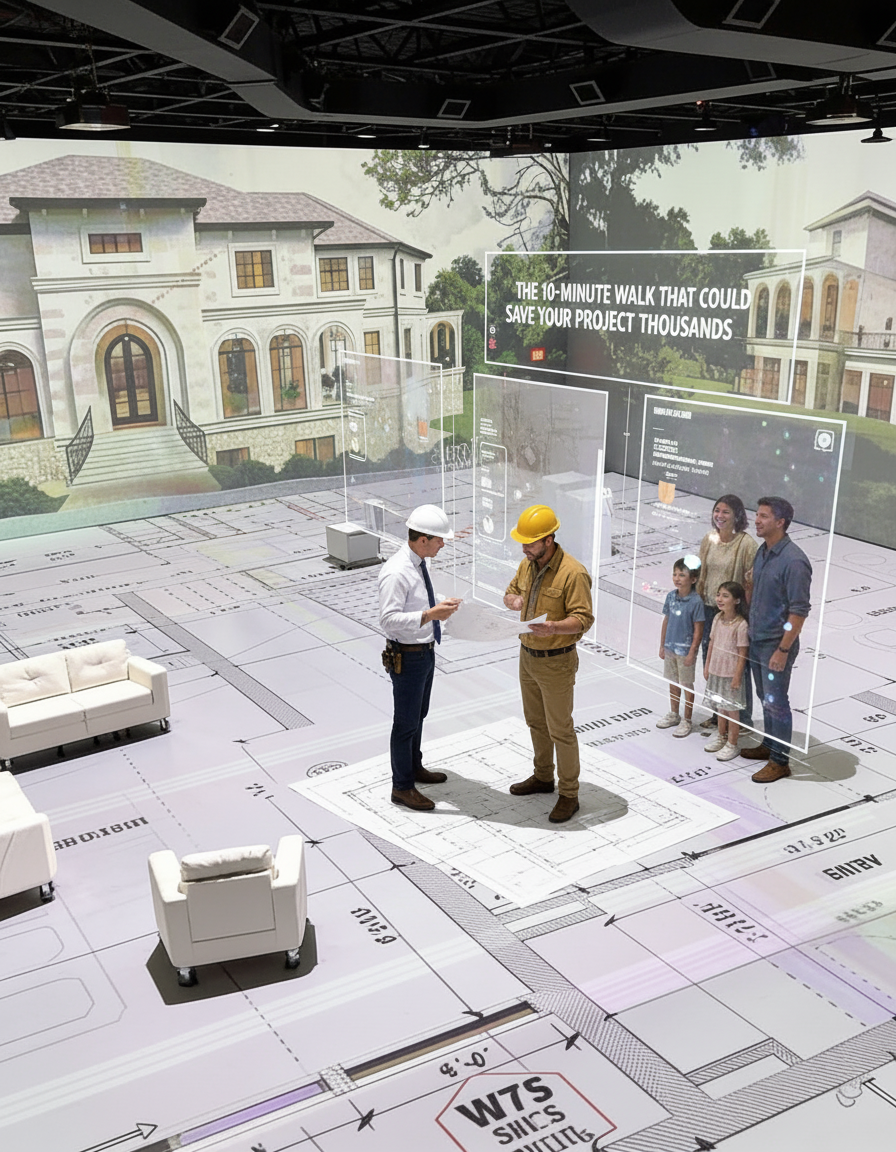
At The BluView, architects, developers, and builders can walk through their designs inside a full-scale immersive environment created specifically for architectural visualization and spatial validation.
Instead of imagining a building through drawings alone, project teams can experience their spaces at life-size scale and refine their design before construction begins.
This process helps professionals:
• prevent costly construction mistakes
• validate architectural layouts
• improve collaboration between teams
• strengthen client understanding
• move into construction with greater confidence
Because sometimes the most valuable insight comes from something very simple.
A walk through the space.
Visit The BluView
📍 The BluView Experience
156 Route 59, Suffern, NY 10901 – Unit B4
📞 Phone: (845) 533-4473 Ext. 101
📷 Instagram: @thebluview_experience
Schedule your walkthrough and experience your design before it becomes reality.