
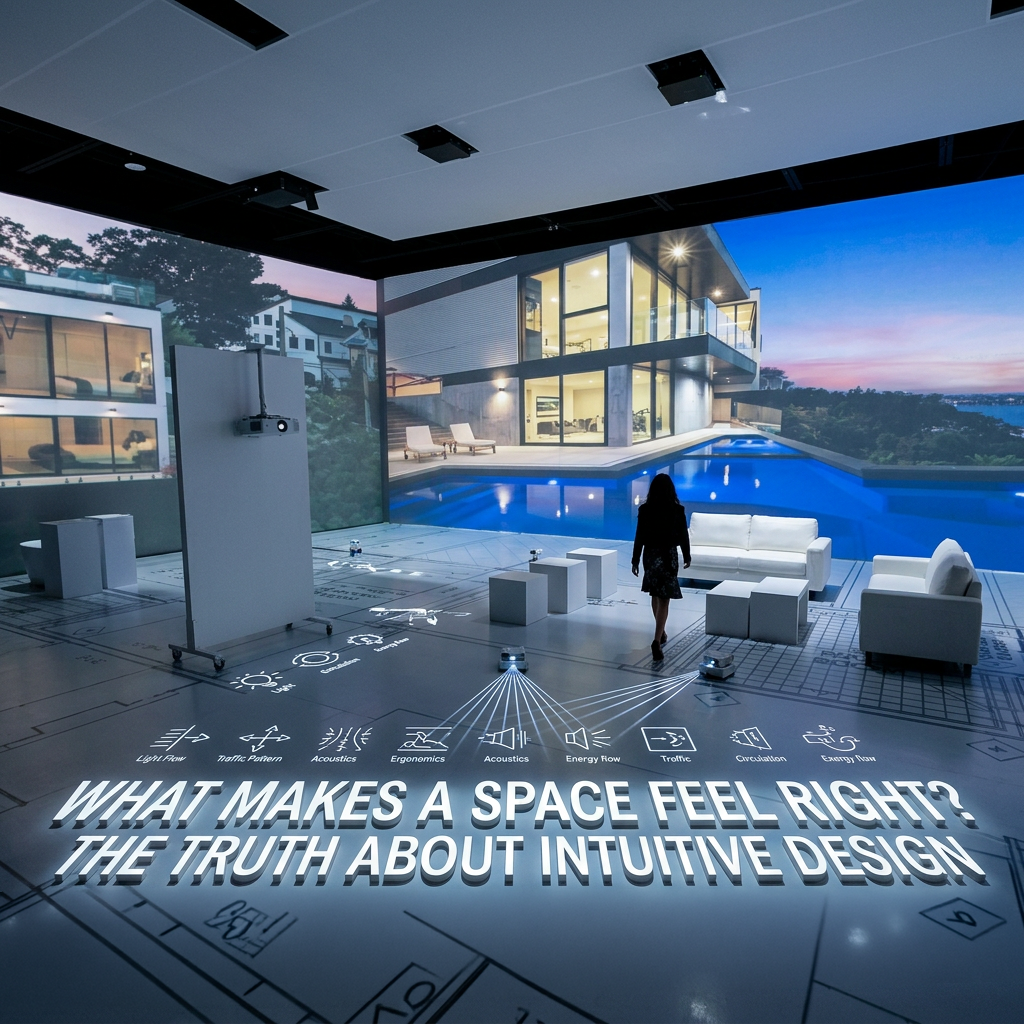
There’s a moment when you walk into a well-designed space… and everything just makes sense.
You don’t stop to figure things out.
You don’t hesitate.
You don’t question where to go or how to use the space.
It feels natural. Effortless. Almost obvious.
And that’s exactly the point.
At The BluView, we believe that the best design is the one you don’t have to think about. Because when someone has to stop and figure out how a space works, something is already wrong.
The Difference Between Seeing and Understanding a Space
Most people judge design by how it looks.
Clean lines. Modern finishes. Open layouts.
But visual appeal doesn’t guarantee usability.
A space can look stunning… and still feel confusing.
Why?
Because humans don’t experience spaces visually first—they experience them behaviorally.
We move. We react. We navigate.
If the design doesn’t align with natural human behavior, the experience breaks down.
That’s where confusion begins.
What Makes a Space Feel “Obvious”
An intuitive space is one that aligns perfectly with how people expect to move and interact.
You instinctively know:
- Where to walk
- Where to pause
- Where things belong
- How spaces connect
There’s no mental effort required.
That’s what makes a space feel “obvious.”
And achieving that requires more than aesthetics—it requires understanding human behavior in design.
The Hidden Cost of Confusing Design
Confusing spaces don’t always fail dramatically.
They fail subtly.
You might notice:
- Slight hesitation when moving between areas
- Unclear pathways
- Awkward positioning of key elements
- A general feeling that something is “off”
Over time, this creates friction.
And friction destroys the experience.
In high-end design, even small moments of confusion can lower the perceived quality of the entire project.
Why Layout Alone Isn’t Enough
Many designers focus heavily on layout.
Room placement. Dimensions. Function.
But layout is static.
Experience is dynamic.
A layout might technically “work,” but if it doesn’t guide behavior naturally, it creates mental effort for the user.
That’s why spatial flow and intuitive movement are more important than layout alone.
Designing for Human Behavior
Great design anticipates how people will naturally use a space.
It doesn’t force behavior—it supports it.
This means:
- Entry points align with natural movement
- Circulation paths feel obvious
- Key areas are positioned where people expect them
- Transitions guide you without interruption
When design follows behavior, the experience becomes seamless.
When it ignores behavior, confusion takes over.
The Role of Flow in Creating Clarity
Flow is what eliminates the need to think.
It creates a rhythm that guides you through the space without effort.
In a well-designed space:
- Movement feels continuous
- Transitions feel smooth
- There are no dead ends or awkward pauses
This is what creates clarity.
And clarity is what makes a space feel premium.
How Confusion Shows Up in Real Projects
Even experienced developers and designers fall into this trap.
Because on paper, everything looks fine.
But in reality, issues appear like:
- Misaligned doorways that disrupt movement
- Spaces that compete instead of connect
- Circulation paths that cross awkwardly
- Areas that lack clear purpose
These are not obvious in drawings—but they become very obvious in experience.
Why Intuitive Design Feels Like Luxury
Luxury is often associated with materials and finishes.
But the truth is, real luxury is ease.
A space that feels effortless:
- Feels more comfortable
- Feels more valuable
- Feels more refined
Because when everything works naturally, the user feels it immediately.
That’s what separates high-end design from average design.
The BluView Approach to Intuitive Spaces
At The BluView, we focus on one core principle:
Design should feel obvious.
We help clients:
- Identify areas where confusion may occur
- Align layouts with natural human behavior
- Refine flow and transitions
- Validate the experience before construction
Because we know that clarity is not accidental—it’s designed.
From Confusion to Confidence
When a space is intuitive, everything changes.
Clients feel:
- More confident in their decisions
- More connected to the design
- More satisfied with the final result
And most importantly—they don’t have to think about the space.
They simply enjoy it.
The Takeaway
If someone has to think about how to use your space…
Something is wrong.
Great design removes questions.
It removes friction.
It removes confusion.
And what’s left is a space that feels natural, effortless, and elevated.
Because in the end, the best spaces don’t just look right.
They feel obvious.