
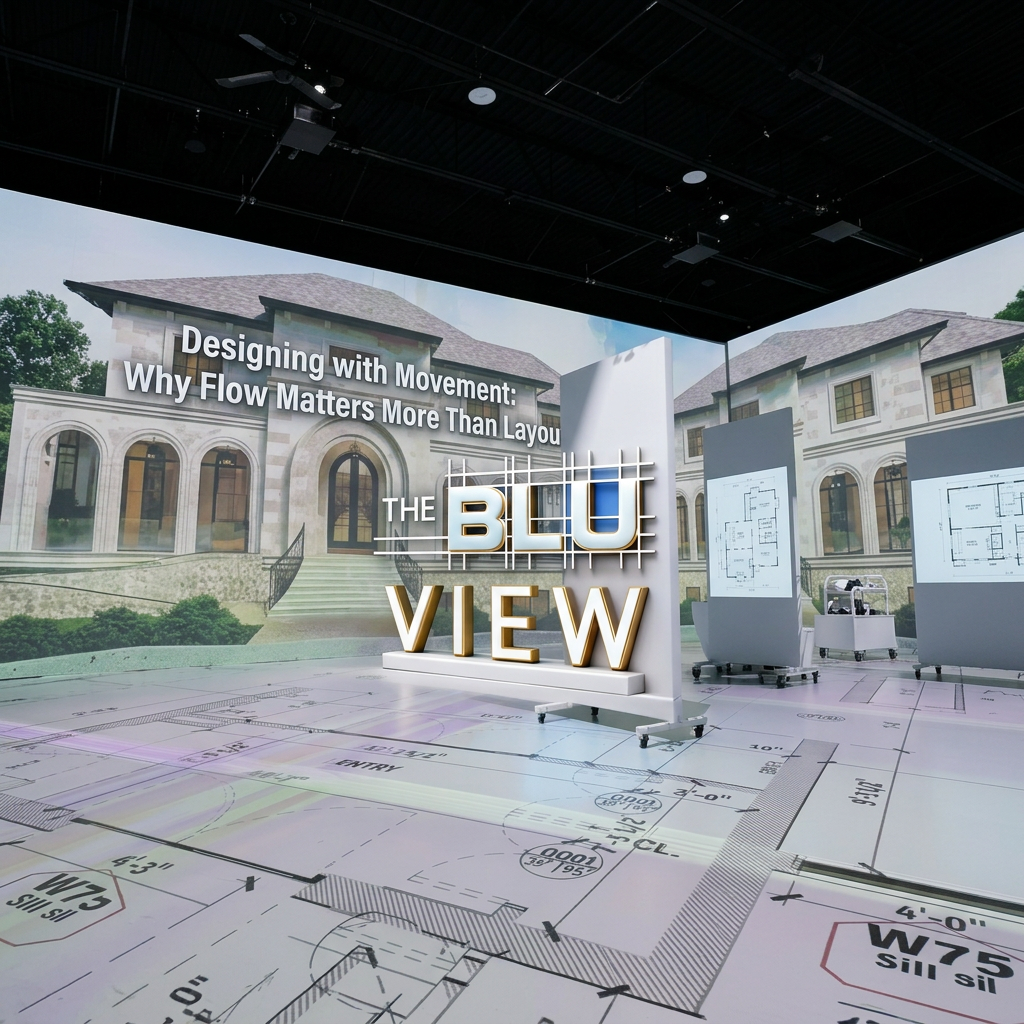
When people think about design, they often focus on the layout. How rooms are arranged. How everything fits together on paper.
But the truth is, layout is only part of the equation. The real magic in design happens when you consider how the space flows. The way you move through it. The transitions between rooms, the rhythms of spaces, and the connections that guide you from one area to the next.
At The BluView, we’ve learned that even the most thoughtfully planned layouts can feel disjointed or uncomfortable if the flow isn’t right. The experience of a space is determined by more than just how rooms are placed—it’s about how we move through them. And often, flow is the most overlooked element in early planning.
Why Flow Matters More Than Layout
Layout might get all the attention, but flow is what determines the user experience. A well-planned layout without smooth transitions can still feel disjointed and incomplete. Conversely, a space with carefully thought-out flow feels natural, intuitive, and immersive.
Great flow creates:
- Seamless movement between spaces
- Clear, purposeful transitions
- A sense of rhythm and continuity
Poor flow, on the other hand, can make even the most beautiful spaces feel uncomfortable, chaotic, or confusing.
A perfect layout looks great on paper, but it’s the flow that brings it to life.
The Relationship Between Movement and User Experience
Human experience is defined by movement. Think about how you navigate through a space—how you enter, how you feel as you move from room to room, and how the space reacts to your movements. Flow is the invisible force that shapes this experience.
When the flow of a space is designed thoughtfully, it’s almost as if the space guides you naturally. You feel comfortable, without even thinking about it. But when the flow is off, you’ll notice it immediately—you’ll hesitate at transitions, feel disconnected between areas, and constantly adjust to the awkwardness.
Flow dictates how we engage with a space on a deeper level than layout. It shapes the emotional connection to the environment and defines how it enhances or detracts from daily living.
The Hidden Pitfall of Disconnected Layouts
One of the most common mistakes in design is focusing too much on the layout and not enough on how spaces connect. The result is a disjointed experience.
You might have the perfect arrangement of rooms, but if they don’t flow well together, the space feels awkward and inefficient. Here’s how this happens:
- Rooms that are placed too far apart, making movement feel forced
- Poorly placed doorways or windows that disrupt flow
- Lack of natural transitions, making spaces feel isolated
- Oversized or undersized hallways that confuse the rhythm of the space
These disconnects can create frustrating experiences for the people who use the space. Even if the layout looks perfect on paper, it can lead to constant friction in daily life.
Creating Flow: A Consideration Beyond Aesthetics
Flow isn’t just about convenience; it’s about experience. A space that flows well feels right emotionally—it feels purposeful, intentional, and complete.
To design for flow, you must consider:
- How people will move through the space
- Where natural pauses happen, and how transitions feel
- How spaces relate to each other in terms of functionality and atmosphere
When these elements are aligned, the space becomes a living, breathing environment that supports and enhances everyday activities. When they’re not aligned, the space feels off-kilter, no matter how beautiful or well-placed the rooms are.
How Poor Flow Impacts the Overall Design
Poor flow does more than just create inconvenience—it undermines the entire design experience.
Here’s why:
- It forces uncomfortable movement patterns
- It isolates rooms and makes spaces feel disconnected
- It limits how the space can be used, reducing its overall potential
- It creates subtle tension in what should be a seamless environment
On the other hand, good flow encourages:
- Effortless movement from one space to the next
- Natural, instinctive transitions
- A clear path through the environment, without obstacles or confusion
The difference is stark. When the flow is right, the space feels intuitive, like an extension of yourself. When it’s wrong, you feel it immediately.
How to Evaluate and Improve Flow in Your Design
The good news is that improving flow doesn’t always require a complete redesign. Sometimes, it’s as simple as making slight adjustments to layout or transitions.
Here are a few key tips to ensure your space flows well:
- Evaluate movement: Walk through the space as if you were using it day-to-day. How does it feel to move from one room to another? Are the transitions smooth?
- Think about transitions: Pay attention to doorways, hallways, and spaces between rooms. Do they guide you naturally, or do you feel lost or confused?
- Define zones: Even in open layouts, create clear zones that help people understand the flow of the space. Whether through changes in ceiling height, lighting, or furniture arrangement, it’s important to define transitions.
- Consider lighting: Lighting plays a major role in guiding movement through space. Consider how natural and artificial light lead the eye and enhance the flow.
The BluView Approach to Flow and Design
At The BluView, we believe that flow is at the heart of great design. We don’t just focus on creating beautiful layouts—we focus on crafting spaces that are intuitive and functional. Every design decision is made with flow in mind, ensuring that spaces not only look good but feel good.
Our approach includes:
- Immersive walkthroughs to test how spaces flow before construction
- Intuitive transitions that guide movement naturally
- Seamless connections between zones and areas, enhancing usability and comfort
By focusing on flow, we ensure that your space feels premium, no matter the layout. After all, the best spaces don’t just look good—they work beautifully in real life.
The Takeaway
When designing a space, remember this: It’s not just about how it looks on paper—it’s about how it feels when you move through it.
Flow should always be your first priority. When your space flows well, everything else falls into place. A perfect layout can feel disconnected without movement, but a thoughtfully planned flow transforms any design into an experience.