
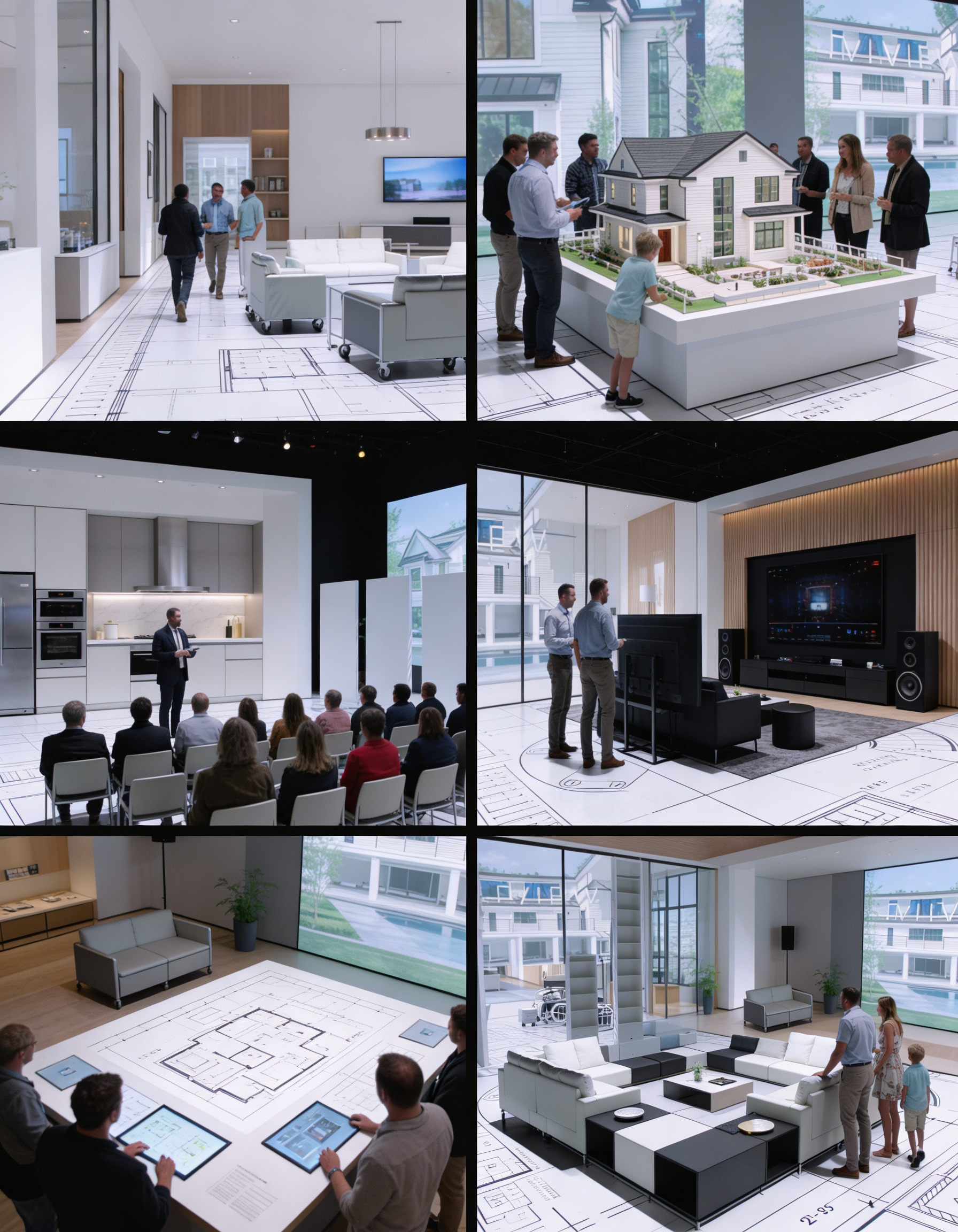
In construction and development, most problems don’t start on the job site—they start long before the first shovel hits the ground. Misunderstood drawings, assumptions made from flat plans, and decisions rushed under pressure often lead to expensive corrections later. The truth is simple: when people can truly see and experience a space before it’s built, better decisions follow.
Traditional blueprints and 3D renderings still require interpretation. Not everyone reads plans the same way, and even experienced professionals can miss scale, flow, or functionality issues when designs remain on paper or screens. This is where immersive 1:1 visualization changes everything.
Understanding Space the Way It Will Actually Feel
Immersive visualization allows clients, architects, builders, and stakeholders to walk through a project at full scale before construction begins. Instead of imagining ceiling heights, hallway widths, or room proportions, they experience them exactly as they will exist.
This clarity eliminates guesswork. Clients gain confidence because they no longer have to “trust the process” blindly—they can see it. Designers receive clearer feedback, and builders work from decisions that have already been validated. When everyone understands the space the same way, alignment becomes natural.
Eliminating Costly Change Orders Before They Happen
One of the most expensive issues in construction is the change order. Adjustments made during or after construction often require rework, material waste, schedule delays, and additional labor costs. Most change orders stem from decisions that would have been different if the space had been fully understood earlier.
Immersive walkthroughs surface these issues early. A doorway that feels too narrow, a workspace that lacks flow, or a layout that doesn’t support real-world use becomes immediately obvious. Fixing these problems in the planning phase costs a fraction of what it would during construction.
By resolving design concerns before permits are finalized and materials are ordered, projects stay on budget and on schedule.
Reducing Design Errors Through Real Experience
Even the most detailed drawings can hide design flaws. Scale misjudgments, awkward transitions between spaces, or overlooked functionality issues often don’t appear until the building is partially complete.
Immersive visualization exposes these problems instantly. Walking through a space reveals how rooms connect, how people move, and how design elements interact in real life. This level of insight allows teams to refine layouts, optimize functionality, and ensure that every square foot serves its intended purpose.
Design decisions become intentional rather than reactive.
Faster Approvals and Stronger Stakeholder Buy-In
Approvals are often delayed because stakeholders don’t fully understand what they’re approving. When decision-makers struggle to visualize the final outcome, hesitation follows. Immersive experiences remove that barrier.
When clients, investors, planning boards, or internal teams can step into the project and experience it firsthand, approvals become faster and more confident. Questions are answered in real time, concerns are addressed immediately, and revisions happen collaboratively instead of through lengthy back-and-forth exchanges.
This clarity accelerates timelines and keeps momentum moving forward.
Lower Stress, Higher Confidence for Everyone Involved
Construction is stressful by nature, especially when uncertainty is involved. Immersive visualization replaces uncertainty with confidence. Clients feel empowered rather than overwhelmed. Architects gain assurance that their vision is being understood. Builders receive clearer direction before construction begins.
When expectations are aligned early, the entire project experience improves. Fewer surprises mean fewer conflicts, fewer delays, and a smoother path from concept to completion.
Building Smarter Starts Before Building Begins
Seeing a building before it’s built is no longer a luxury—it’s a strategic advantage. Immersive 1:1 visualization transforms planning into an experience, allowing teams to make smarter decisions, reduce risk, and protect budgets long before construction starts.
At The BluView, this approach isn’t just about visualization. It’s about clarity, confidence, and control—so projects move forward with fewer surprises and better outcomes.
When you can experience the future before it becomes reality, you don’t just build better—you build smarter.